
Compliments of
 Alan Van Zee
President | NMLS #: 297154
Hawaii Mortgage Company, Inc.
Company NMLS #: 232582
Alan Van Zee is one of the top producing Mortgage Originators in the state, originating over $2,000,000,000 to date. He has written and published this weekly newsletter for the past 18 years. It is the most widely read mortgage, real estate, and finance publication in Hawaii.
Hawaii Mortgage Company, now in our 27th year of providing mortgages to the people of Hawaii, is proud to have a complaint-free history. We make sure our clients are happy!
News and Insight
For the Weekend of August 22nd, 2026
Hawaii’s Most Read Mortgage, Real Estate, and Finance Publication for 18 Years
Volume 18 – Issue 45
Cats
If you live on Oʻahu, you've seen them. They're behind restaurants, in parks, around shopping centers, near beaches and tucked into residential neighborhoods. Sometimes there's one, sometimes there are dozens. Feral and free-roaming cats have become such a familiar part of Oahu's landscape that most of us barely notice them anymore.
Maybe we should.
NOAA estimates there are approximately 300,000 free-roaming cats on Oahu alone. That includes feral, abandoned and lost cats, along with owned cats allowed to roam outdoors. Think about that number. That's roughly one outdoor cat for every three people living on Oʻahu. And this isn't simply a nuisance or animal-welfare problem. It has become an environmental crisis.
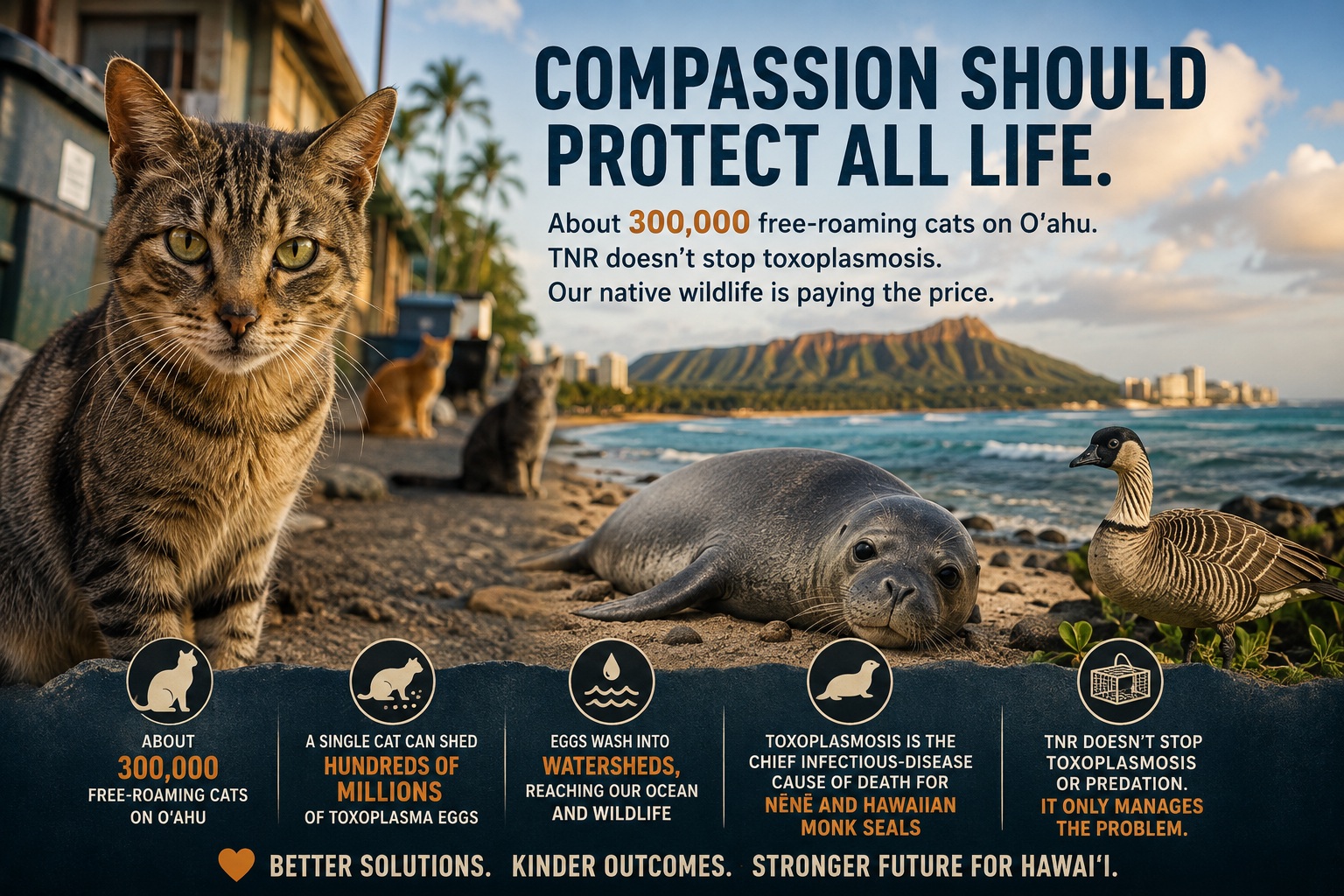
One of the primary strategies for dealing with feral cats is Trap-Neuter-Return, commonly called TNR. The idea sounds compassionate. A cat is trapped, spayed or neutered, often vaccinated, identified by a clipped ear and then released. Because the cat can no longer reproduce, the theory is that eventually the colony will shrink naturally. There's just one uncomfortable part we don't talk about very much:
We put the cat back on the street…
We take an animal we've decided deserves humane treatment, sterilize it, give it some basic medical care and then return it to a parking lot, drainage ditch, industrial area, park or beach to fend for itself. Some colonies have devoted caregivers who provide food. But food isn't a home. These cats still face cars, disease, parasites, fights, injuries, weather and intentional cruelty. I think it's fair to ask: Is returning an animal to that existence really humane? Are we managing suffering instead of solving it?
In some ways, this reminds me of how we deal with another highly visible problem in Hawaii - homelessness. To be clear, I’m not comparing homeless people to feral cats. I'm comparing our response to two very different kinds of suffering. With homelessness, we provide meals, medical assistance, shelters and other services. These programs are important and compassionate. But too often, after receiving assistance, the person is right back on the street. We've helped them survive another day without necessarily changing the circumstances that put them there. With feral cats, we've institutionalized a surprisingly similar philosophy. Trap them, treat them, sterilize them - then put them back outside. In both cases, perhaps we've become too comfortable managing suffering instead of solving the underlying problem.
There is another major problem with TNR that has nothing to do with reproduction. Neutered cats still hunt. And neutered cats can still spread toxoplasmosis. NOAA says research indicates that between 70% and 90% of the cats in a colony must be sterilized, and no new cats can enter the colony before TNR will cause that population to decline. On an island with abandoned pets, roaming domestic cats and interconnected colonies, maintaining those conditions is extraordinarily difficult. More importantly, NOAA specifically says TNR does not stop the spread of toxoplasmosis or reduce predation on native birds and sea turtles. That's rather important in Hawaii. Cats aren't native to these islands. Many of our birds evolved for thousands of years without feline predators. The Hawaii Department of Land and Natural Resources calls feral cats "one of the most devastating predators of Hawaii's unique wildlife."
And then there's toxoplasmosis…
Toxoplasma gondii is a parasite with a remarkable and deadly relationship with cats. Cats are the only animals in which the parasite completes its reproductive cycle. Infectious material shed in cat feces contaminates soil and can eventually wash through our watersheds into the ocean. There it can infect one of Hawaii's most beloved endangered animals - the Hawaiian monk seal. DLNR has described toxoplasmosis as the chief infectious-disease cause of death for both nēnē and critically endangered Hawaiian monk seals. And this isn't a theoretical threat. In 2026 alone, NOAA has already confirmed toxoplasmosis deaths of Hawaiian monk seals on Oʻahu. The tragedy is that the cat doesn't even have to be anywhere near the ocean. Something deposited by a cat miles inland can eventually make its way through the watershed and into the marine environment.
Meanwhile, outdoor cats prey directly upon native birds. DLNR has even documented an ear-notched cat - a cat that had been part of a managed colony—with a dead endangered Hawaiian coot in its mouth. Sterilizing a predator doesn't stop it from being a predator.
There's a Real Estate Connection, too…
This is also a neighborhood and property issue. Established cat colonies can mean feces, urine odors, fleas, fighting, noise and animals congregating around dumpsters, landscaping and parking areas. For condominium associations, property managers and homeowners, the problem can become remarkably difficult once a large colony is established. Like traffic, noise, flooding or neighborhood maintenance, it's one more example of how conditions outside your property lines can affect your enjoyment - and potentially the desirability of your home when you go to sell it.
Real estate isn't the most important reason we need to address this. Compassion shouldn't mean accepting the status quo. I love animals, which is precisely why I find our current approach so troubling. This shouldn't become a battle between people who love cats and people who love Hawaiian wildlife. We should be able to care about both.
Alternatives are finally being discussed. In 2025, the State approved preliminary due diligence for a proposed 20-acre Oahu sanctuary designed to house feral and homeless cats, particularly animals removed from areas where they threaten protected wildlife. Although I can’t see 20 acres housing 300,000 cats. Expanded adoption, affordable spay-and-neuter programs, stronger enforcement against abandonment and keeping owned cats indoors should all be part of the conversation.
I don't pretend to know the perfect solution. But when approximately 300,000 cats are living or roaming outdoors on one small island, while endangered native wildlife continues to die from predation and cat-borne disease, I think we can acknowledge one uncomfortable truth:
What we're doing today may be managing the problem. But we certainly haven't solved it.
And now the week’s economic news…….
Home Sales Slip
Mortgage markets were pulled in different directions this week. Rising tensions in the Middle East pushed oil prices higher, which raised concerns about future inflation. That pressure was offset by the Treasury's announcement that it plans to significantly increase its purchases of longer-term government debt. The economic data released this week had only a modest impact, and mortgage rates finished with little overall change.
One of the biggest developments was the continued growth of U.S. government debt, which topped $40 trillion this week, more than double the $19 trillion level from ten years ago. As investors have demanded more compensation to hold that debt, longer-term yields have moved higher. With an eye on this, the Treasury announced on Wednesday that it will at least double the maximum amount of its purchases of government debt over the next few months from the current $2 billion limit. According to the Treasury, the purchases will focus on maturities of ten to thirty years to provide greater liquidity to longer-term bond markets. This added demand for bonds caused yields to decline, including yields on mortgage-backed securities, which was positive for mortgage rates.
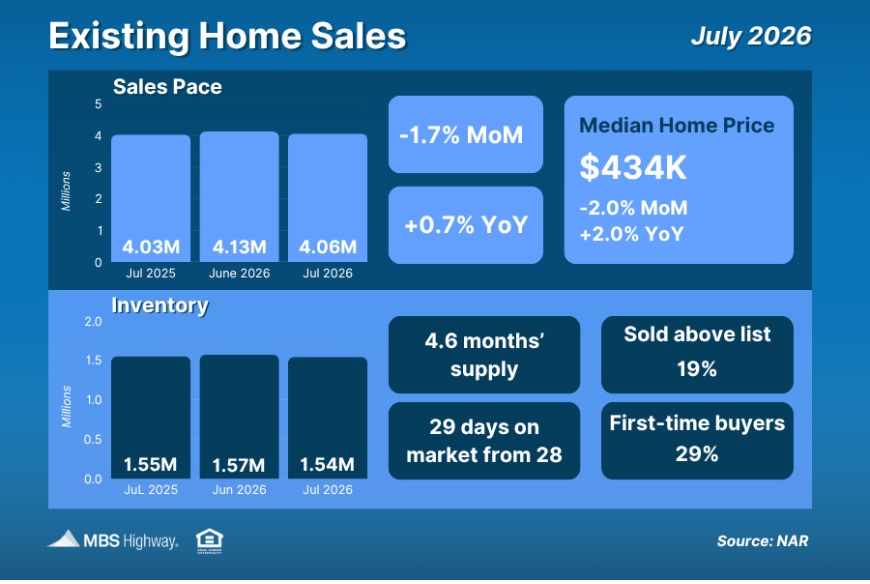 In July, sales of previously owned homes slipped 2% from June but still were up slightly from a year ago. The median price of $434,100 was up 2% from last year. Inventory remains one of the biggest challenges for buyers. There is currently only about a 4.6-month supply of homes nationally. Inventory was also slightly lower than it was a year ago.
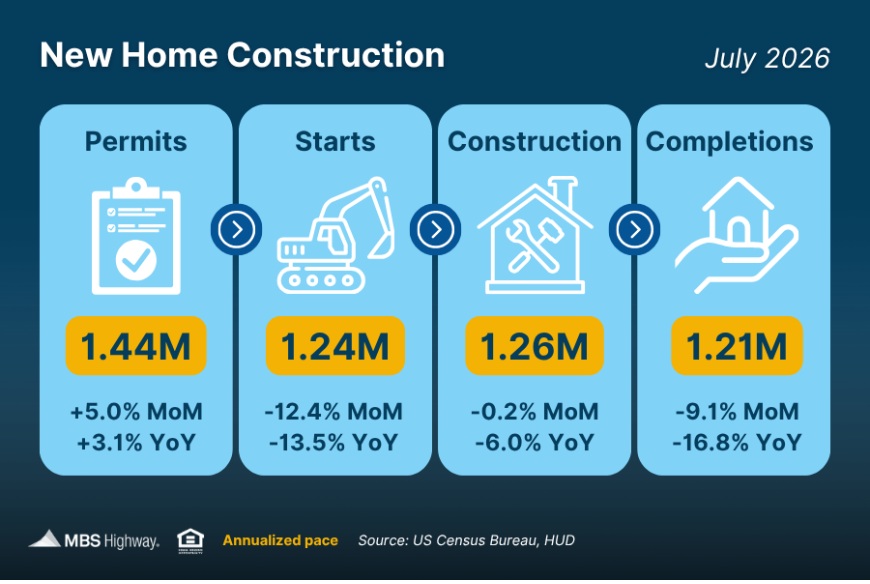 The latest home building data was not encouraging. After surging 19% in the prior month, overall housing starts in July plunged 13% from June, far more than expected. Single-family starts declined for the fourth straight month to the lowest level since November 2022 and are running 16% below last year's pace. On a more positive note, single-family building permits, a leading indicator of future construction, rose 3% from June and were up slightly from a year ago.
A survey of home builder sentiment on housing market conditions from the NAHB unexpectedly rose slightly to 35 but has remained in negative territory below 50 for twenty-eight straight months. To help generate demand, 63% of builders offered sales incentives in July, while 35% reduced home prices. Builders continue to cite rising land, labor, and material costs as significant obstacles to increasing new home supply.
The big picture: For now, mortgage rates remain caught between competing forces. Inflation concerns and elevated government debt are putting upward pressure on longer-term yields, while Treasury bond purchases are providing some support. Meanwhile, the housing market continues to face a combination of limited inventory, affordability challenges, and cautious builders.
Next Week
Looking ahead, attention will remain fixed on the conflict in the Middle East and the proposed deal to ease tensions. Investors also will monitor comments from Fed officials about future monetary policy. For economic data, Consumer Confidence and New Home Sales will come out on Tuesday. Personal Income and the PCE price index, the inflation indicator favored by the Fed, will be released on Wednesday. In addition, the Jackson Hole economic summit will take place next week, and central bank officials sometimes make important announcements at this event.
Until next week….

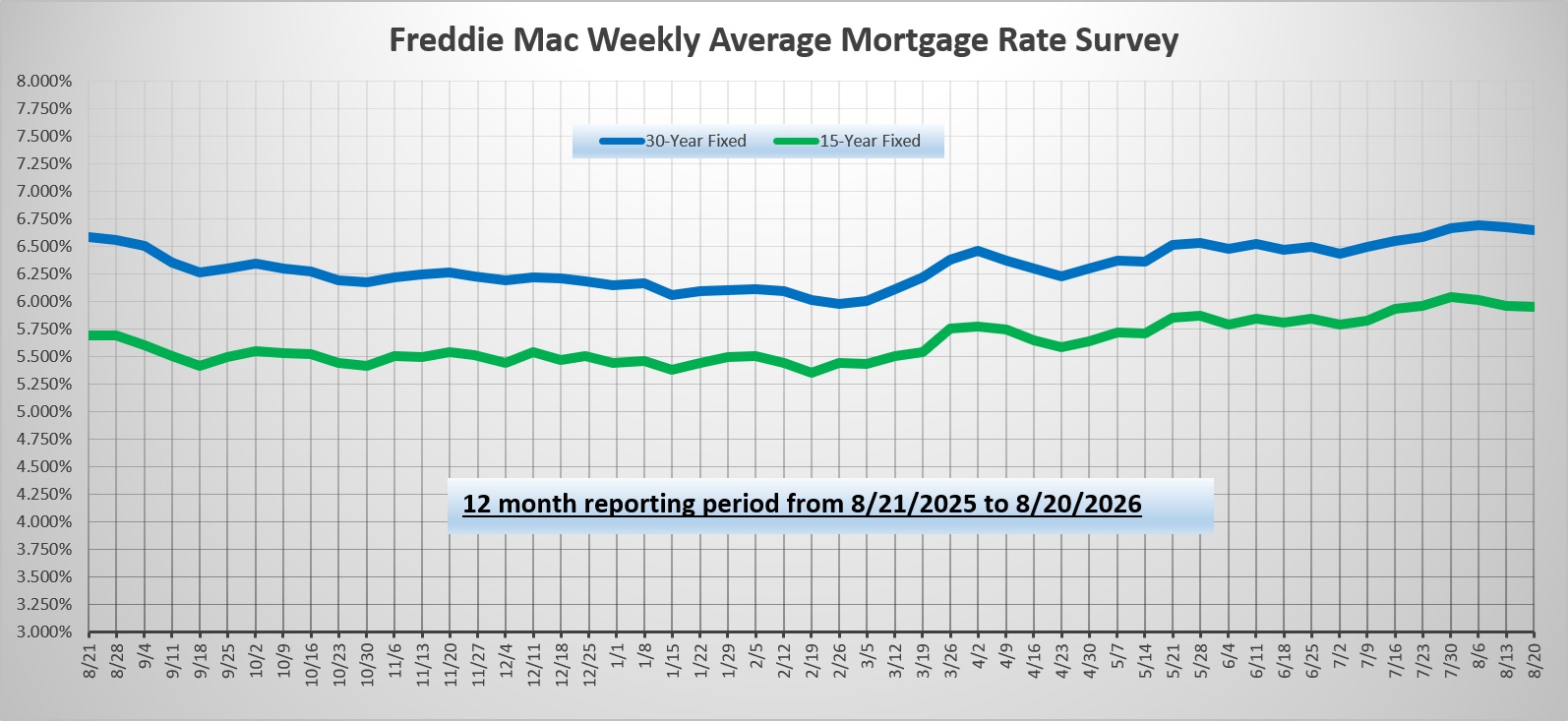
*** Please note that Freddie Mac publishes their weekly rate report on Wednesday mornings from data received Monday and Tuesday.
The graph above is intended to shown rate trends, and not “today’s current rate”. ***
Reviews From Our Past Clients
With every client, we promise to provide you with a comprehensive analysis of your mortgage needs, the best service possible, and the best rates we can find. We make it our mission to have every transaction close with our clients happy with the service we provided. Browse through the hundreds of reviews we’ve received from our clients posted on both Google and Zillow.com, and read what they thought of their experience using Hawaii Mortgage Company.
Google Link:
Hawaii Mortgage Company Review on Google.com
Zillow.com Link:
Hawaii Mortgage Company Reviews on Zillow.com
Our Rate Quote System is Available to You
Our automated rate quoting system is live. Now you can check rates and try different scenarios 24-hours a day. Remember, it’s just a computer. For non-standard rate quotes, such as construction, vacant land, and other specialty programs, you’ll still need to give a call.
Here’s the link: https://www.hawaiimortgage.net/todays-rates/

Do you think all lenders are the same?
There is a difference when you use Hawaii Mortgage Company for your financing. Here’s a short video telling you why:

Broker vs. Banker?
Click the link below to get a quick lesson on why working with a Mortgage Broker will benefit you on your next transaction.


