

Compliments of
 Alan Van Zee
President | NMLS #: 297154
Hawaii Mortgage Company, Inc.
Company NMLS #: 232582
Alan Van Zee is one of the top producing Mortgage Originators in the state, originating over $2,000,000,000 to date. He has written and published this weekly newsletter for the past 19 years. It is the most widely read mortgage, real estate, and finance publication in Hawaii.
Hawaii Mortgage Company, now in our 28th year of providing mortgages to the people of Hawaii, is proud to have a complaint-free history. We make sure our clients are happy!
News and Insight
For the Weekend of September 12th, 2026
Hawaii’s Most Read Mortgage, Real Estate, and Finance Publication for 18 Years
Volume 19 – Issue 3
Homeowner Exemption Filing Reminder
Did you buy an owner-occupant property this year? Did you move into a home this year you previously used as a rental? The deadline to file your homeowner exemption for property tax relief is coming very quickly for those on Oahu and Kauai.
The deadline to file on Oahu and Kauai is September 30th. For those living in Maui County or on the Big Island, the deadline is December 31st.

For the majority of owner-occupant homeowners, you’ll see a significant reduction in your property taxes. Filing as an owner-occupant not only gives you an exemption for an amount of valuation, in many counties you’ll be placed in a different category and rate of taxation. That change in designation could result in thousands saved in property taxes.
Even if you believe you’re all set and don’t need to check – don’t be fooled into complacency. You’d be surprised at the number of clients I come across that never filed the form. For them, with their property taxes being paid from their mortgage, they never bothered to check how much of that payment is going towards property taxes. Don’t be that person!
Here’s the part that bothers me the most…
While the deadline to submit your declaration is in 2026, your property taxes won’t change until August of 2027. And if you miss the deadline, the updated correct tax rate won’t take effect until the following July.
Let me give you an example that illustrates how this system is rigged against you.
Kainoa and Lisa will purchase their owner-occupant home on Kauai for $900,000. The transaction will close on October 5th, 2026. The home they are purchasing was used as a rental by the former owner that paid the non-owner-occupant tax rate with no exemptions. Because they were unable to file the exemption form prior to the September 30th deadline, the tax classification of their home will remain in effect until July of 2028. That’s right. They’ll pay higher taxes for almost two full years.
How much more will they pay? If the tax assessed value of the home is $800,000, here’s the difference they’ll pay based on today’s current tax rates:
Non-Owner-Occupant tax rate on Kauai is $5.45 per $1,000 in valuation. That’s an annual tax of $4,360.
If the home was used as a vacation rental, that rate is $11.30. That annual tax bill is $9,040.
The rate for an owner-occupant is $2.59. Additionally, Kauai grants an exemption of $220,000 in home value for those under the age of 60. In Kainoa and Lisa’s case, for tax purposes, their home would be taxed at an assessed value of $580,000. Those two factors maker their annual taxes $1,502.
For Kainoa and Lisa, having to potentially pay $15,000 more in property taxes all due to a timing issue is outrageous. I have never got a good answer from anyone in government as to why these deadlines are so far from when the changes actually take effect. In today’s electronic age, these changes should be instantaneous.
The politicians will make the excuse that the delay will also benefit some too, and that it all evens out in the end. That’s true. If an investor buys a previously held owner-occupant home and turns it into a rental, they’ll benefit from the lag and see lower taxes until the system catches up. But is that a benefit we need to hand out?
I can understand in the days of paper records that county tax offices needed time to process mailed-in exemption claim forms and therefore needing the lag was somewhat justified. But today, with the technology our government should be using - that delay in reclassification is unreasonable to say it kindly.
Don’t pay more in property taxes than you should! Don’t read this and just assume you’re all set. If you want to check your property’s tax classification here are the links for each county’s online real property tax website:
Oahu:
https://www.qpublic.net/hi/honolulu/search.html
Kauai:
https://www.qpublic.net/hi/kauai/search.html
Maui:
Hawaii:
https://qpublic.schneidercorp.com/Application.aspx?AppID=1048&LayerID=23618&PageTypeID=2&PageID=9876
A Natural Disaster’s Impact on Mortgages & Real Estate
Living on Oahu, our family was spared from any real impact from the recent storms. Sadly, too many in our state have experienced catastrophic losses. Their road to recovery will take time and a lot of money. Today I want to give some insight as to how those not directly impacted still face challenges when Mother Nature casts her fury upon our islands.
Disaster Area Declarations:
If you live in an area that was officially declared a disaster area and you are in the middle of a real estate transaction, expect delays – even if the property didn’t sustain any damage. Except for those on the ground, your lender nor the appraiser will know how your property fared in the storm. That’s why, even if your home escaped damage, and the appraisal was completed prior to the storm, the appraiser will need to come back to the property to make sure and take pictures. And yes, the cost for that additional inspection is the responsibility of the party getting the loan.
Government Shutdowns:
It was still early on Monday before anyone knew the true impact the hurricane would have, when both the state and the counties throughout the islands canceled government services for Tuesday. I am all for being cautious, but why make the call so early? By early morning on Tuesday, it was evident that except for Kauai, the other counties did not receive severe damage.
I don’t think the governor, nor the mayors, realize how shutting government impacts everyone else who is not affected by the disaster. Specifically for real estate and mortgages, these shutdowns stop transactions from the recordation process. Mortgages, deeds, liens – and their releases, are all stuck in limbo until the Bureau of Conveyances reopens. Vital statistics records like birth certificates, death certificates, and marriage licenses and certificates don’t get processed. What happens to all the people that are now forced to make online reservations – sometimes weeks in advance, for things like driver’s license road tests? They can’t go the next day, as those dates and times are already filled.
Of the roughly 10,000 Oahu residents that work for the city, and the roughly 52,000 that work for the state, did all of them need a paid day off on Tuesday?
While the early reports indicated that Kauai suffered greater damage than during hurricane Iniki, as of this writing 75% of Kauai has their power restored and less than 100 homes were lost. While any loss is terrible, thankfully it was not worse.
And now the week’s economic news…….
Higher Oil Prices
Mortgage rates moved higher again this week, reaching their highest levels in more than a year. One of the biggest factors behind the move? Rising oil prices and growing concerns about inflation.
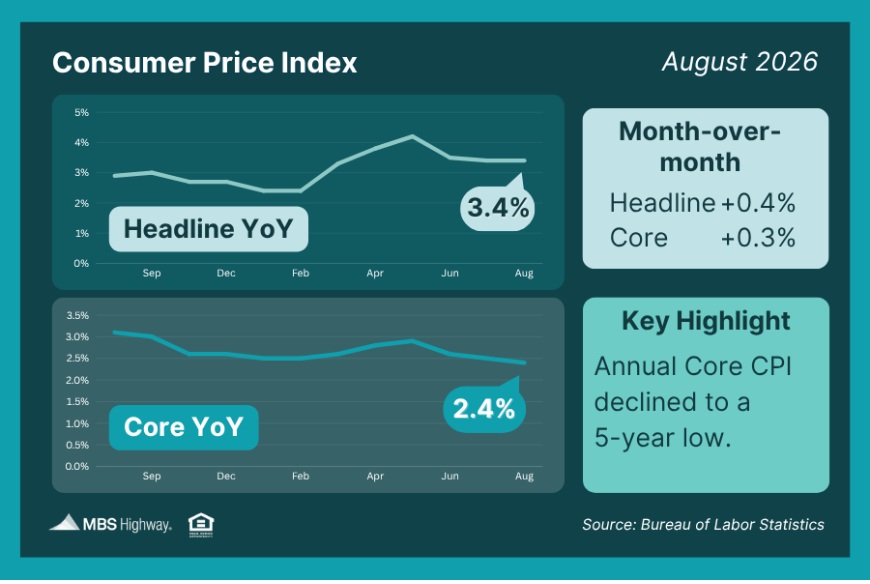 Interestingly, the latest inflation report didn't have much of an impact on the markets. The Consumer Price Index (CPI) showed prices rising 0.4% in August, which was right in line with expectations. On an annual basis, inflation came in at 3.4%, unchanged from the previous month.
To reduce short-term volatility and get a clearer picture of underlying inflation trends, investors look at core CPI, which excludes food and energy. In August, Core CPI was 2.4% higher than a year ago, down from 2.5% last month and the lowest annual rate since March 2021. Shelter (housing) costs were up 3.0% on an annual basis and continue to be a primary reason why bringing inflation down to the 2% target of the Fed remains challenging. Airline fares and used vehicle prices also posted significant increases this month. Investors now are pricing in a roughly 90% chance that the Fed will raise the federal funds rate at its meeting next week.
On Thursday, the European Central Bank (ECB) raised its benchmark interest rate by the anticipated 25 basis points to 2.50%. Policymakers cited rising energy costs and their potential impact on food, goods, and services prices. The ECB also acknowledged increased uncertainty stemming from ongoing geopolitical tensions in the Middle East and in Ukraine, which could create additional inflation pressures while weighing on economic growth. Investors currently expect further rate increases from the ECB in the coming months.
Bottom Line: There's a lot for investors to weigh right now: slower economic growth, inflation that remains elevated, and continued uncertainty around the world. For mortgage rates, that means we could see more volatility in the weeks ahead. Rates will continue to react to incoming economic data, Federal Reserve comments, and major developments around the world.
Next Week
Looking ahead, attention will remain fixed on the conflict in the Middle East and oil prices. The next Fed meeting will take place on Wednesday, and the majority of investors anticipate an increase in the federal funds rate. For economic reports, Retail Sales will be released on Wednesday. Since consumer spending accounts for over two-thirds of U.S. economic activity, the retail sales data is a key measure of the health of the economy. Housing Starts will come out on Thursday.
Until next week….

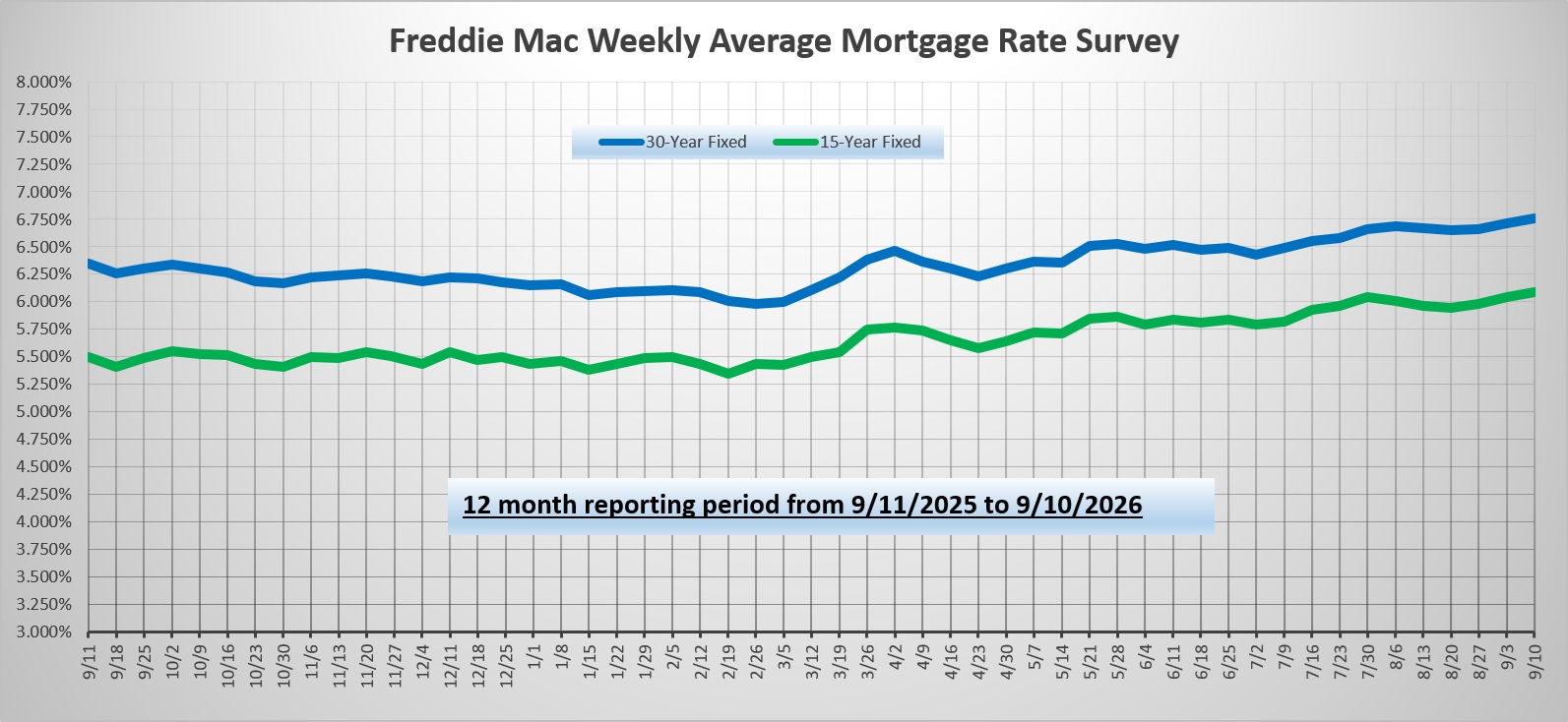
*** Please note that Freddie Mac publishes their weekly rate report on Wednesday mornings from data received Monday and Tuesday.
The graph above is intended to shown rate trends, and not “today’s current rate”. ***
Reviews From Our Past Clients
With every client, we promise to provide you with a comprehensive analysis of your mortgage needs, the best service possible, and the best rates we can find. We make it our mission to have every transaction close with our clients happy with the service we provided. Browse through the hundreds of reviews we’ve received from our clients posted on both Google and Zillow.com, and read what they thought of their experience using Hawaii Mortgage Company.
Google Link:
Hawaii Mortgage Company Review on Google.com
Zillow.com Link:
Hawaii Mortgage Company Reviews on Zillow.com
Our Rate Quote System is Available to You
Our automated rate quoting system is live. Now you can check rates and try different scenarios 24-hours a day. Remember, it’s just a computer. For non-standard rate quotes, such as construction, vacant land, and other specialty programs, you’ll still need to give a call.
Here’s the link: https://www.hawaiimortgage.net/todays-rates/

Do you think all lenders are the same?
There is a difference when you use Hawaii Mortgage Company for your financing. Here’s a short video telling you why:

Broker vs. Banker?
Click the link below to get a quick lesson on why working with a Mortgage Broker will benefit you on your next transaction.


