

Compliments of
 Alan Van Zee
President | NMLS #: 297154
Hawaii Mortgage Company, Inc.
Company NMLS #: 232582
Alan Van Zee is one of the top producing Mortgage Originators in the state, originating over $2,000,000,000 to date. He has written and published this weekly newsletter for the past 19 years. It is the most widely read mortgage, real estate, and finance publication in Hawaii.
Hawaii Mortgage Company, now in our 28th year of providing mortgages to the people of Hawaii, is proud to have a complaint-free history. We make sure our clients are happy!
News and Insight
For the Weekend of October 17th, 2026
Hawaii’s Most Read Mortgage, Real Estate, and Finance Publication for 18 Years
Volume 19 – Issue 8
Are Invasive Pests Becoming a Threat to Hawaii Home Values?
Imagine finding the perfect home in a quiet Oahu neighborhood. The property is beautiful, the landscaping is lush, and everything seems just right. Then the sun goes down, and hundreds of coqui frogs begin calling. Suddenly, that peaceful neighborhood doesn't seem quite so peaceful.
For years, Hawaii has struggled with invasive species. What was once primarily an environmental concern may increasingly become a real estate concern. The growing presence of coqui frogs, little fire ants, and coconut rhinoceros beetles raises an uncomfortable question: Could these pests eventually affect the value of our homes?
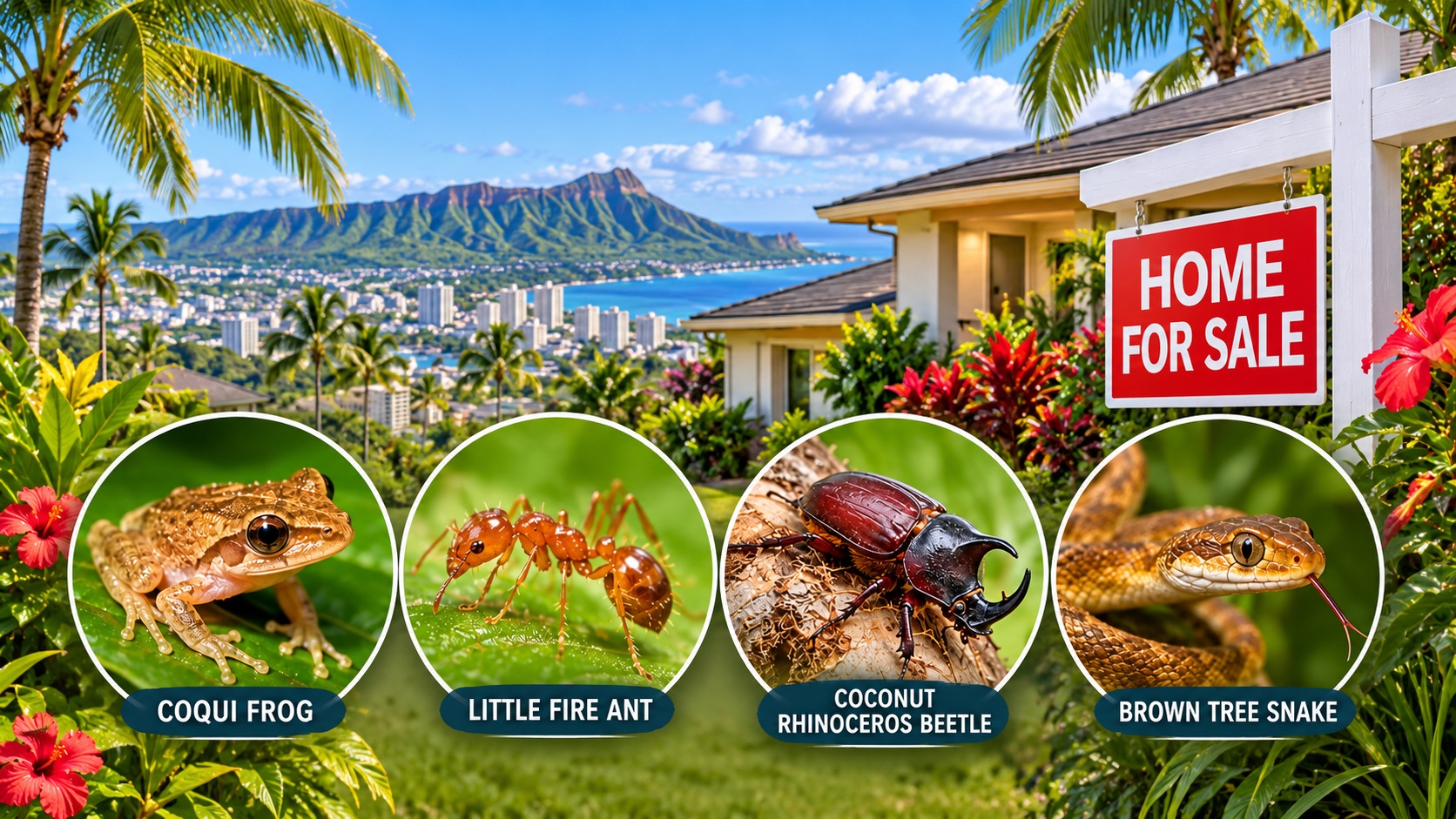
A recent report from Honolulu Civil Beat highlights just how serious the situation has become in Palolo Valley. Despite years of efforts to control coqui frogs, their population has expanded to the point that state officials are now focusing on containment rather than eradication. Experts estimate that addressing the infestation could cost more than $5 million over the next five years, with no guarantee of success. Perhaps most troubling is that the state first responded to coqui frogs in Palolo in 2017. Nearly a decade later, the problem has grown substantially worse.
The consequences extend well beyond the irritating nighttime calls of these tiny frogs. Coqui frogs have already affected property values in some locations on Hawaii Island, according to the Oahu Invasive Species Committee. While we don't yet have reliable evidence establishing a measurable reduction in Palolo home values, it's reasonable to question whether prospective buyers will eventually discount properties in heavily infested neighborhoods.
And coqui frogs are only part of the problem. Little fire ants have established themselves in portions of Oahu, threatening the enjoyment of residential yards and gardens. Their painful stings can make outdoor activities miserable for homeowners and pets alike. What happens to the desirability of a home when children cannot comfortably play in the yard or homeowners cannot enjoy their outdoor living spaces without worrying about being stung?
Meanwhile, coconut rhinoceros beetles continue threatening the palm trees that contribute so much to Hawaii's tropical landscape. Replacing mature landscaping can be expensive, and the loss of established trees can diminish a property's appearance and appeal.
What concerns me most is the apparent disconnect between the seriousness of these threats and the resources devoted to stopping them. To be fair, state agencies, invasive species specialists, and community volunteers have worked tirelessly to control these infestations. The state has also appropriated additional money for biosecurity. Their efforts deserve recognition. But dedication alone cannot overcome inadequate resources.
In Palolo, volunteers have removed thousands of frogs while government agencies struggle with staffing and funding limitations. State specialists recently estimated that a dedicated response team would cost approximately $900,000 annually. Yet the current strategy has already shifted toward containing an infestation that officials once hoped to eradicate. We should be asking why residents are being placed in the position of defending their neighborhoods against infestations that government agencies have known about for years. Our state and county governments blow millions each year on worthless endeavors, yet say they don’t have the resources to fully combat invasive species.
There's also a larger financial question that deserves attention. How much will Hawaii taxpayers ultimately spend managing invasive pests that might have been eradicated when their populations were smaller? And how much of the eventual cost will be borne directly by homeowners through pest treatments, damaged landscaping, reduced enjoyment of their properties, and potentially lower resale values?
As concerning as these invasive pests are, there's another potential threat that could make their consequences seem relatively minor: the brown tree snake. Following World War II, brown tree snakes were accidentally introduced to Guam, most likely through military cargo shipments. With few natural predators, their population exploded. The consequences were devastating. The snakes eliminated 10 of Guam's 13 native forest bird species, disrupted the island's ecosystem, and caused extensive damage to electrical infrastructure. Imagine what would happen if these snakes became established in Hawaii, where so many of our native birds are already endangered.
This isn't a hypothetical threat without precedent. Eight brown tree snakes have been discovered in Hawaii since 1981, although none are known to have established a breeding population. Fortunately, government agencies have inspection programs and rapid-response teams intended to prevent their introduction. But are those efforts sufficient? The U.S. Department of Agriculture has estimated that an established brown tree snake population could cause approximately $596 million to $2.1 billion in annual economic damage in Hawaii.
Given what we're witnessing with coqui frogs, little fire ants, and coconut rhinoceros beetles, I believe we have every reason to question whether our government is adequately prepared to prevent an even greater environmental disaster. We already know what happened on Guam. We know the potential consequences for Hawaii. Shouldn't we be making absolutely certain that our prevention programs have the funding, staffing, and resources necessary to keep these snakes out of our islands?
Waiting until a breeding population becomes established before committing sufficient resources would be an extraordinarily costly mistake. Hawaii homeowners already contend with some of the nation's highest housing costs, insurance premiums, and property maintenance expenses. They shouldn't have to accept the unchecked spread of invasive pests as another unavoidable cost of living here. We cannot expect government to eliminate every invasive species. But we should expect a coordinated strategy, adequate funding, measurable results, and accountability when prevention and eradication efforts fall short. Our elected officials should be explaining what additional resources are needed, how those resources will be deployed, and what measurable results taxpayers can expect. Simply announcing another program or appropriation isn't enough if the infestations continue to expand.
The experience with coqui frogs in Palolo Valley should serve as a warning. Once an invasive species becomes established, eradication can become prohibitively expensive or even impossible. With the brown tree snake, the consequences could be catastrophic.
The time to protect Hawaii's environment, neighborhoods, and property values is before these pests become permanently established, not after the opportunity to stop them has already passed.
And now the week’s economic news…….
Inflation Climbs
Despite some discouraging economic news, mortgage rates had a surprisingly strong week, ending noticeably lower. Oil prices climbed, and the latest inflation reports came in hotter than expected. So, what helped rates move down? Investors began shifting money out of riskier technology stocks and into safer investments, including bonds, helping push mortgage rates lower.
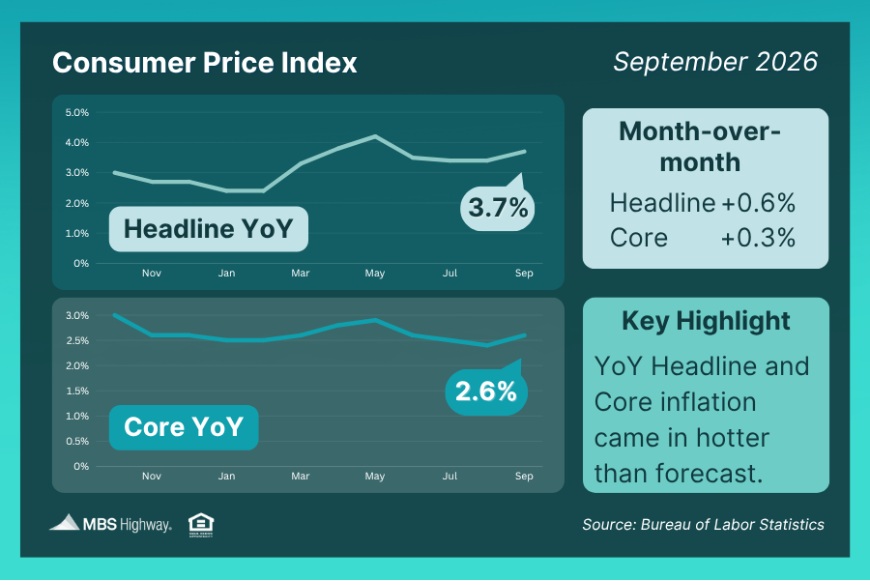 The Consumer Price Index (CPI) report, one of the most closely watched inflation indicators, delivered some unwelcome news. In September, prices jumped 0.6% from August. On an annual basis, CPI was 3.7% higher, up from 3.4% in August and the highest level since May. Diesel prices were up over 60% compared with a year ago, hitting a record high.
To reduce short-term volatility and get a clearer picture of underlying inflation trends, investors look at core CPI, which excludes food and energy. In September, Core CPI was 2.6% higher than a year ago, also up from last month. Shelter (housing) costs were up 3.2% on an annual basis and continue to be a primary reason why bringing inflation down to the 2% target of the Fed remains challenging. Airline fares, computers, and used vehicle prices also posted significant increases this month.
A different inflation report released this week, which measures wholesale costs for producers, added to the concerns. The September Producer Price Index (PPI) was 6.3% higher than a year ago, up from 5.6% in the prior month and far above the consensus forecast. Investors generally tend to place more weight each month on the Consumer Price Index report, which better reflects overall inflation levels in the economy. However, the surprisingly strong PPI reading gave mortgage markets a bigger shock than usual this month.
Despite rising prices and economic uncertainty, consumer spending showed few signs of moderating. Retail sales in September surged 0.8% from August, roughly double the consensus forecast. Consumer spending was a solid 6.3% higher than a year ago, even with higher gas prices. Much of that spending continues to come from higher-income households, supported by continued strength in the stock market. Sustained consumer spending can keep prices elevated, making the path toward lower inflation more complicated.
Bottom Line: Expect more volatility in mortgage rates as investors weigh comments from Fed officials, upcoming economic reports, and changing oil prices tied to the conflict in the Middle East. For homebuyers and homeowners watching rates, inflation data will be especially important in the weeks ahead.
Next Week
Looking ahead, attention will remain fixed on the conflict in the Middle East and oil prices. It will be a light week for economic reports. The NAHB Housing Index will be released on Monday, and Housing Starts will come out on Tuesday.
Until next week….

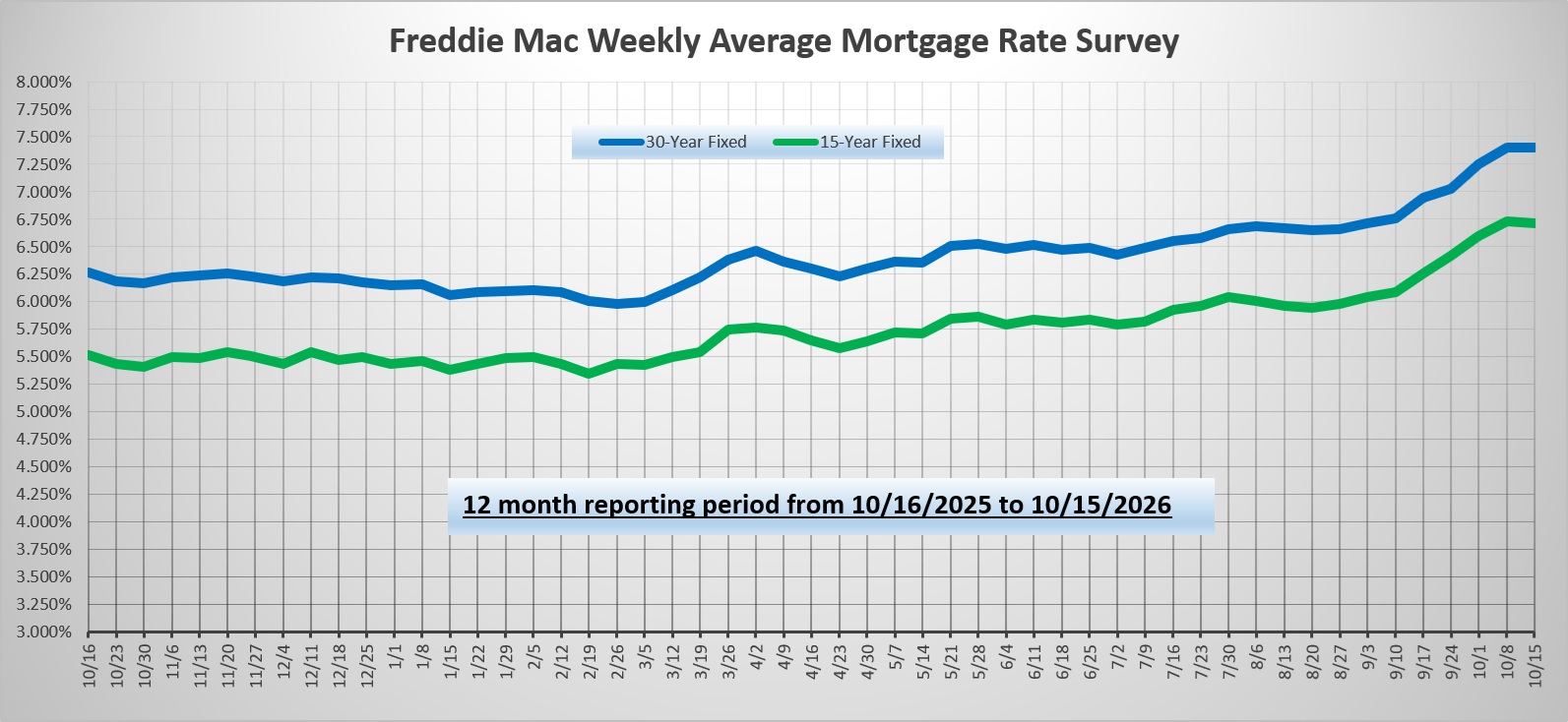
*** Please note that Freddie Mac publishes their weekly rate report on Wednesday mornings from data received Monday and Tuesday.
The graph above is intended to shown rate trends, and not “today’s current rate”. ***
Reviews From Our Past Clients
With every client, we promise to provide you with a comprehensive analysis of your mortgage needs, the best service possible, and the best rates we can find. We make it our mission to have every transaction close with our clients happy with the service we provided. Browse through the hundreds of reviews we’ve received from our clients posted on both Google and Zillow.com, and read what they thought of their experience using Hawaii Mortgage Company.
Google Link:
Hawaii Mortgage Company Review on Google.com
Zillow.com Link:
Hawaii Mortgage Company Reviews on Zillow.com
Our Rate Quote System is Available to You
Our automated rate quoting system is live. Now you can check rates and try different scenarios 24-hours a day. Remember, it’s just a computer. For non-standard rate quotes, such as construction, vacant land, and other specialty programs, you’ll still need to give a call.
Here’s the link: https://www.hawaiimortgage.net/todays-rates/

Do you think all lenders are the same?
There is a difference when you use Hawaii Mortgage Company for your financing. Here’s a short video telling you why:

Broker vs. Banker?
Click the link below to get a quick lesson on why working with a Mortgage Broker will benefit you on your next transaction.


